The Economy of Attention
We pay with our attention long before we pay with money. Every scroll, glance, pause, and click is a transaction.
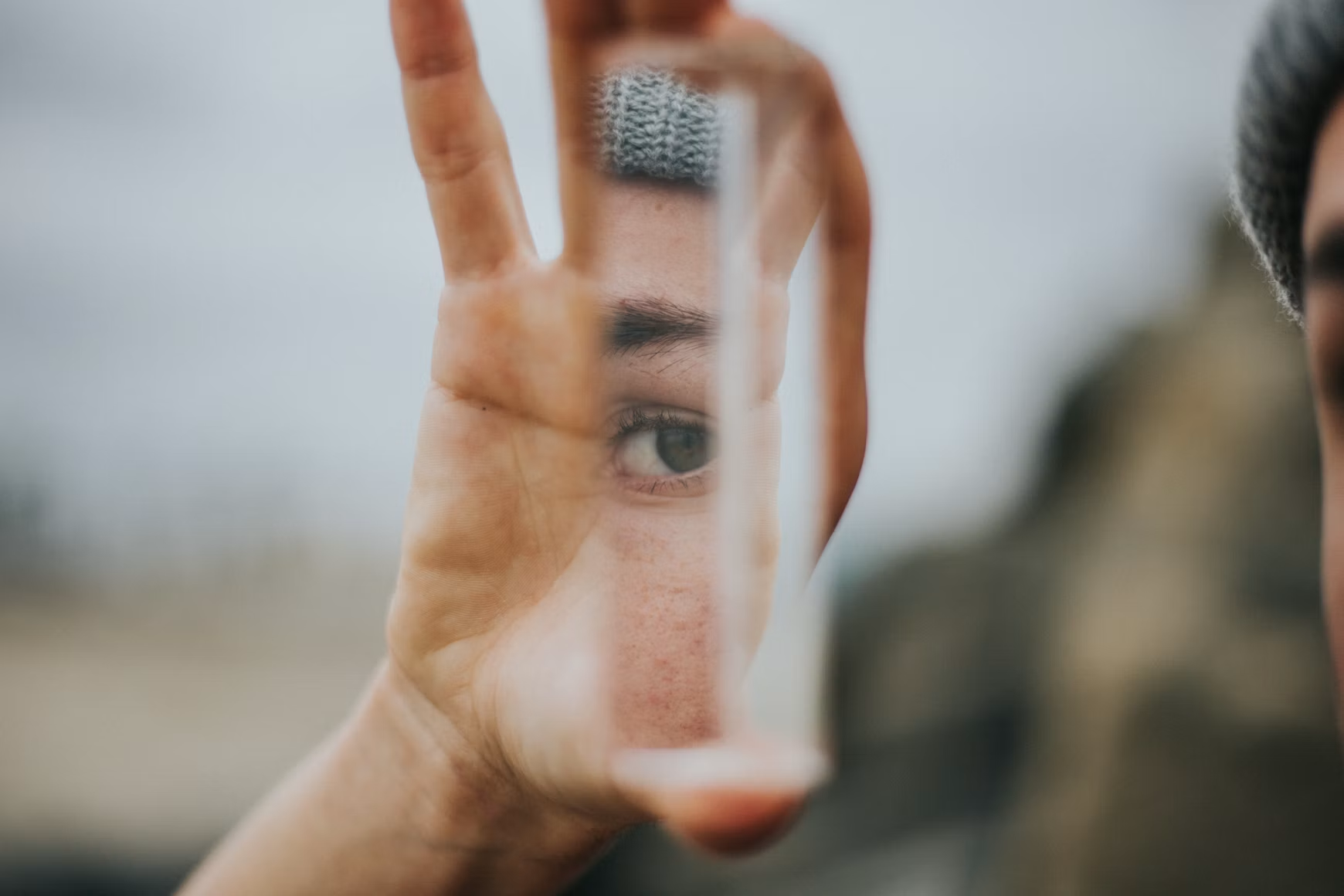
Attention has become both currency and labor, extracted in small increments across the day. Yet unlike money, attention is finite in a more intimate way. It is drawn from our cognitive energy, our emotional bandwidth, our time alive.

Andy Warhol once remarked that “everybody will be famous for fifteen minutes.” The statement has moved from prophecy to operating principle. Visibility is no longer rare, it is engineered. Systems are built to rotate attention rapidly, lifting individuals, trends, and controversies into brief illumination before cycling onward. Fame, in this structure, is not depth of recognition but intensity of exposure. Attention spikes, then dissolves.
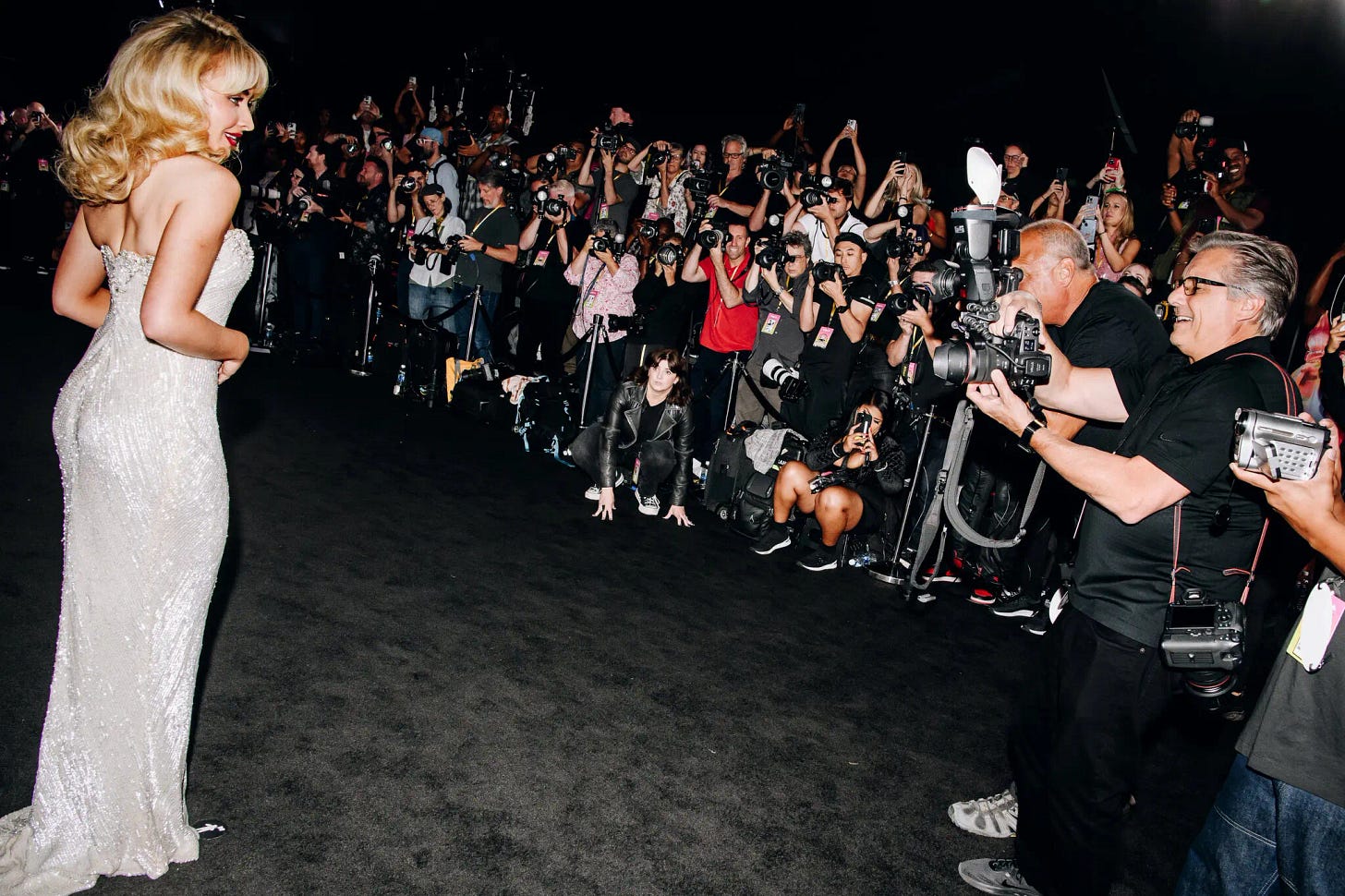
Nowhere is this more visible than in contemporary film promotion. Audiences may pay more attention to what an actor wears on a press tour than to the film being promoted. Red carpet appearances, talk show segments, street style photographs, and social media clips circulate at far greater velocity than reviews or scenes. The outfit becomes headline, the styling becomes narrative, the tour becomes spectacle. Sales can be influenced as much by these circulating images as by the cinematic work itself.
Many diners photograph their plates before taking a bite. Some choose venues based on how dishes will appear on social feeds rather than how they taste. Interior design, lighting, plating, and color palettes are optimized for cameras. A meal becomes content first, nourishment second.
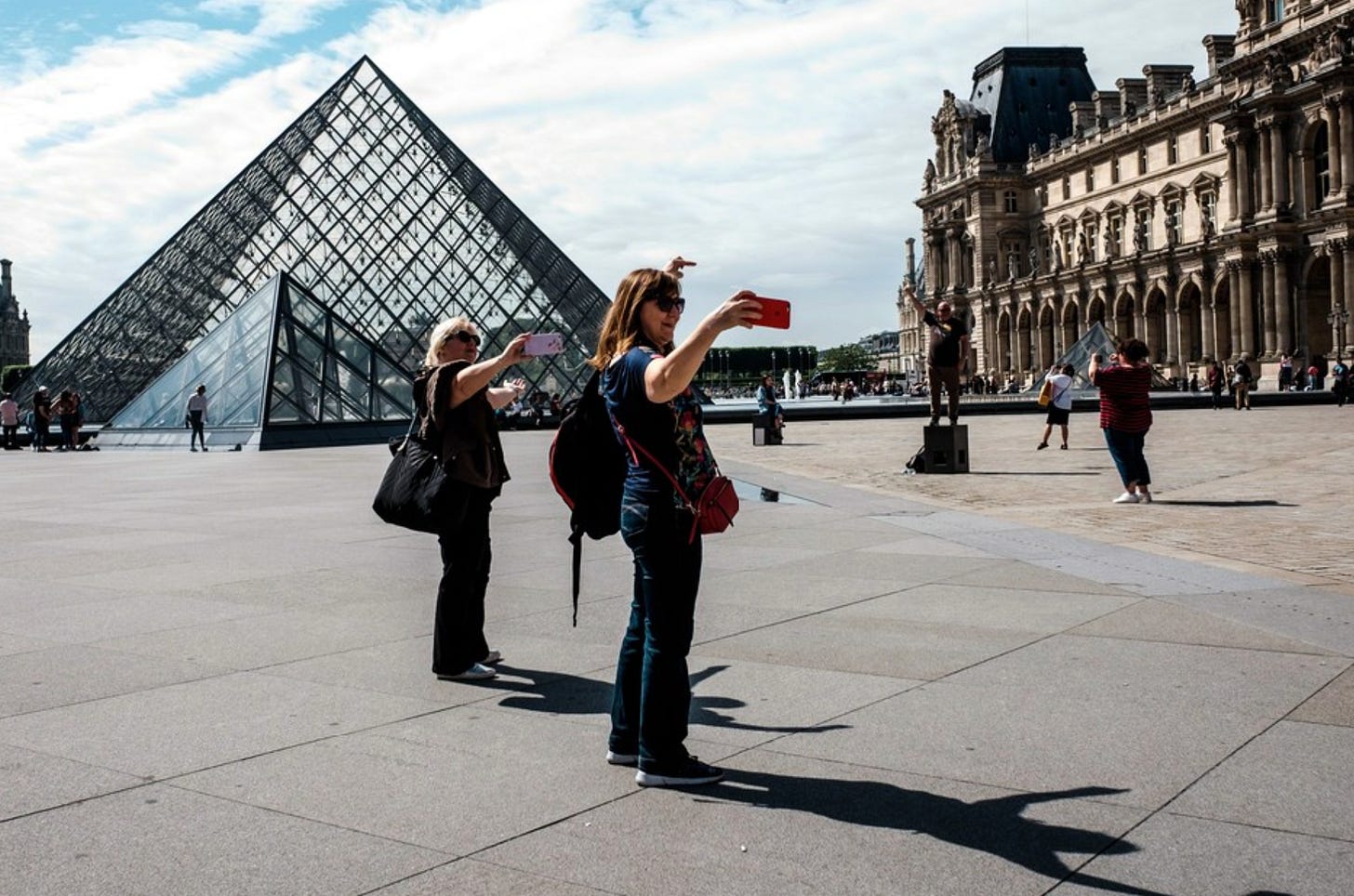
Visitors sometimes experience destinations through their phone screens, moving from one photo location to another. The memory becomes the image captured rather than the place inhabited. Landmarks are consumed as proof of presence.
Fitness offers another example. Workouts are recorded, edited, and posted. Progress is measured not only in strength or endurance but in engagement metrics. The documentation of effort can eclipse the embodied experience of it.
Complex events are flattened into fragments optimized for rapid emotional response.
Even daily purchases follow this logic. Limited product drops generate queues, not always for utility but for visibility. The object signals participation in a moment. Owning it becomes less about use and more about being seen within an attention cycle. News consumption reflects the same compression. Headlines travel faster than articles. Many react to summaries without reading full reporting. Complex events are flattened into fragments optimized for rapid emotional response. Communication itself has shifted. Messages are skimmed. Voice notes are sped up. Long conversations are replaced by short exchanges across multiple platforms. Efficiency replaces presence, even in personal relationships.
All of these examples point to the same structural tilt. Attention gravitates toward what is immediate, visual, and easily shareable. Substance, which requires time and cognitive investment, competes at a disadvantage.
Attention is not passive. It is directed, even when influenced.
When attention is invested in repair, value shifts from replacement to maintenance. Fixing a garment, restoring furniture, servicing electronics, these acts require patience and material understanding. They produce fewer images, fewer posts, yet they extend lifespans and reduce waste. The reward is durability rather than visibility.
Attention invested in relationships follows similar principles. Listening without multitasking, spending time without documenting it, remembering details, these gestures resist metric driven interaction. They build continuity that cannot be compressed into moments of display.
Materials, too, ask for sustained notice. Understanding where wood is sourced, how textiles are processed, what happens to plastics after disposal, this awareness changes behavior. It slows consumption and introduces responsibility into design and purchasing decisions.
Warhol’s fifteen minutes describes attention at peak intensity but minimal duration. Much of contemporary life now operates in these short cycles. Viral trends, product drops, press tours, headline surges, each flare briefly before receding.
Repair, relationships, and material stewardship function on longer timelines. Their value compounds quietly. They do not spike, they accumulate.
Time feels inhabited rather than skimmed.
Attention spent on rapid cycles often leaves fragmentation, a sense of scattered time. Hours pass without clear memory anchors. Attention spent on slower practices, cooking, crafting, fixing, conversing, tends to produce more coherent recollection. Time feels inhabited rather than skimmed.
This is not a rejection of media, fashion, travel, or documentation. These are meaningful cultural expressions. The question is balance. When surface consistently overrides substance, perception narrows.
Investing attention differently means redistributing focus. Watching the film as well as the press tour. Tasting the meal as well as photographing it. Experiencing the place beyond the frame. Reading beyond the headline. Repairing before replacing.
In the end, the economy of attention is also an economy of meaning. What we attend to shapes what we value, and what we value shapes what endures. We still pay with attention. The choice is whether we spend it on moments engineered to flash, or on practices that build continuity across time.
In the end, the economy of attention is also an economy of meaning.